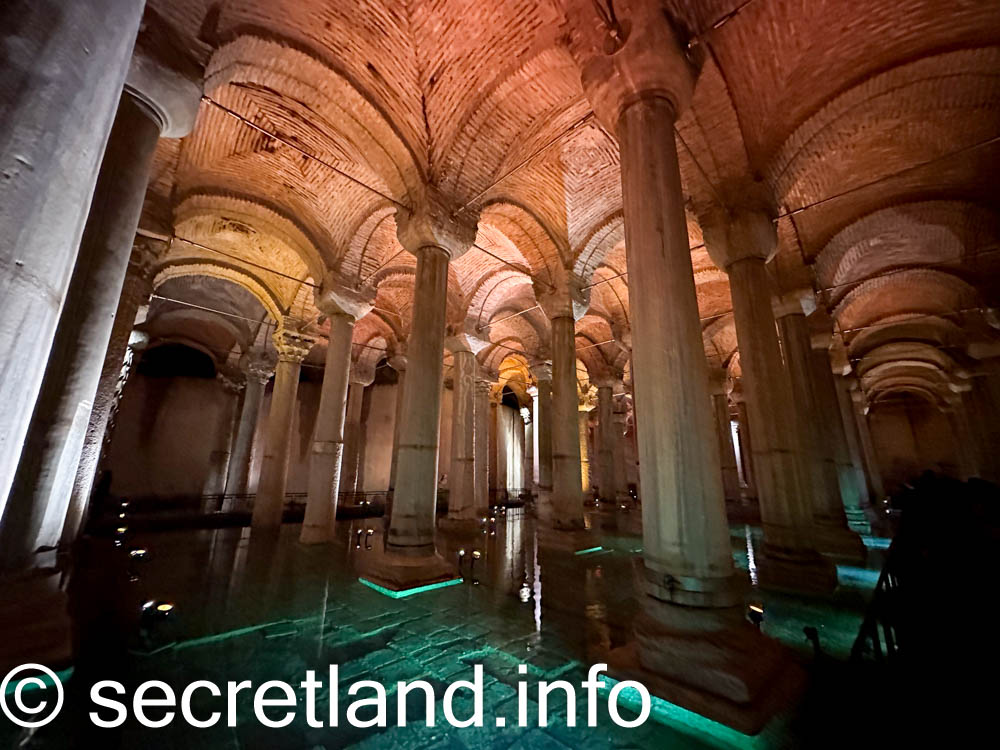
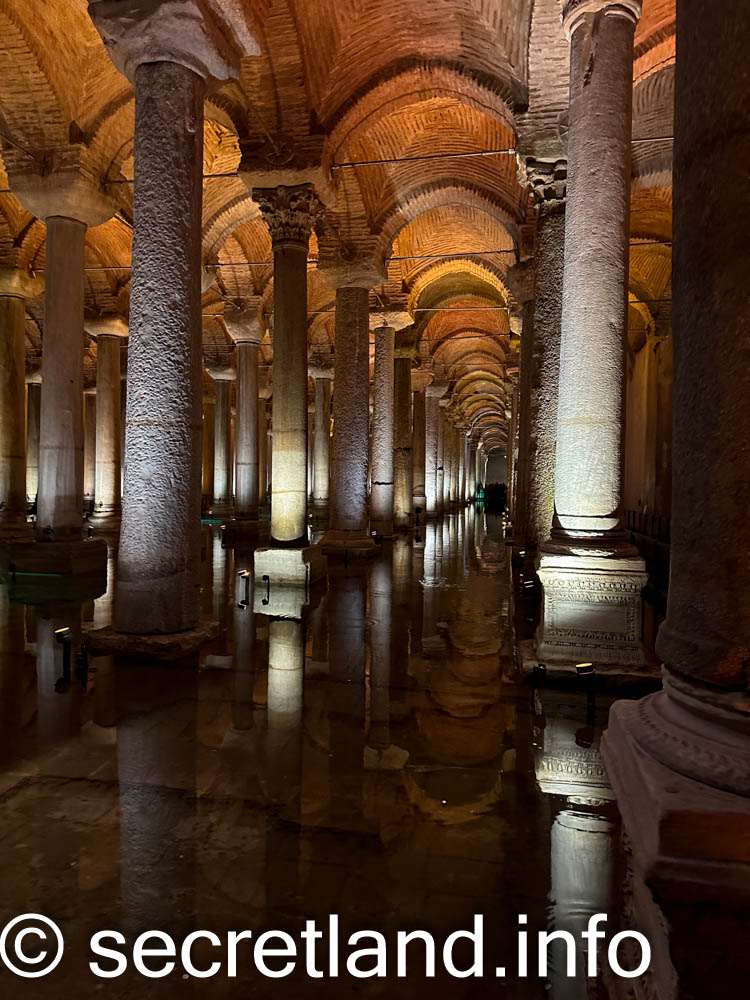
The Basilica Cistern in Istanbul is a vast ancient Roman underground reservoir, whose ceiling is supported by 336 marble columns. The Basilica Cistern covers an area of 9,800 square meters.
The Yerebatan (Basilica) Cistern is an enormous underground structure designed for water storage. It is the largest of the covered cisterns. The structure was built in the 6th century by order of the Eastern Roman Emperor Justinian to supply water to the Great Palace—the administrative center—and the surrounding buildings in the monumental heart of the city. According to written sources, water was delivered to the cistern via the Aqueduct of Hadrian.
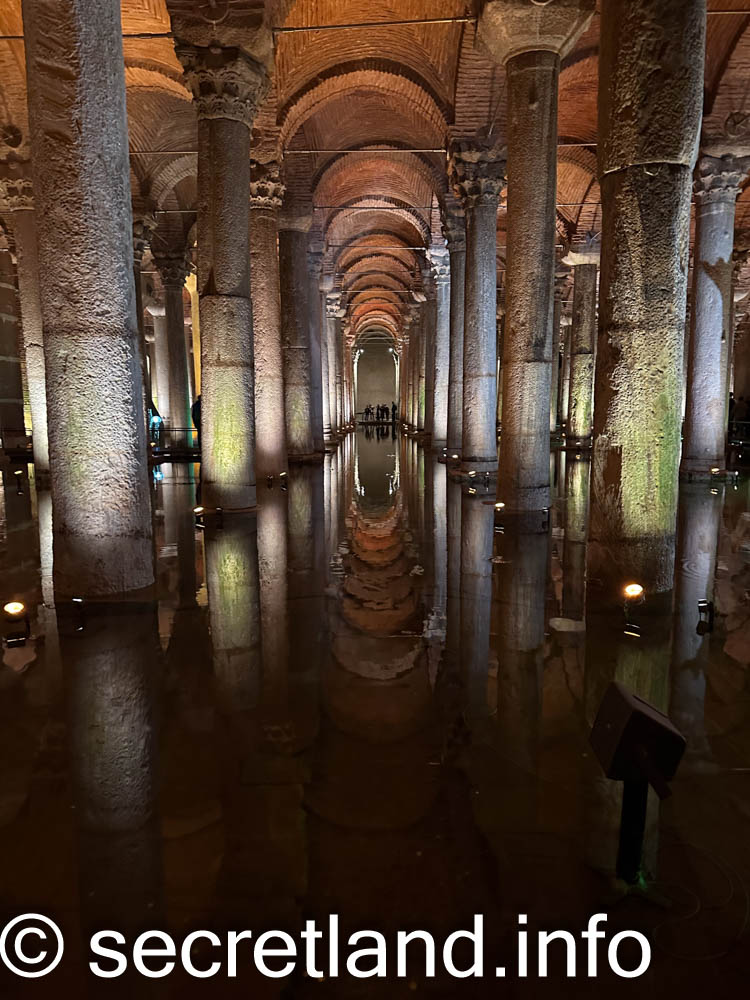
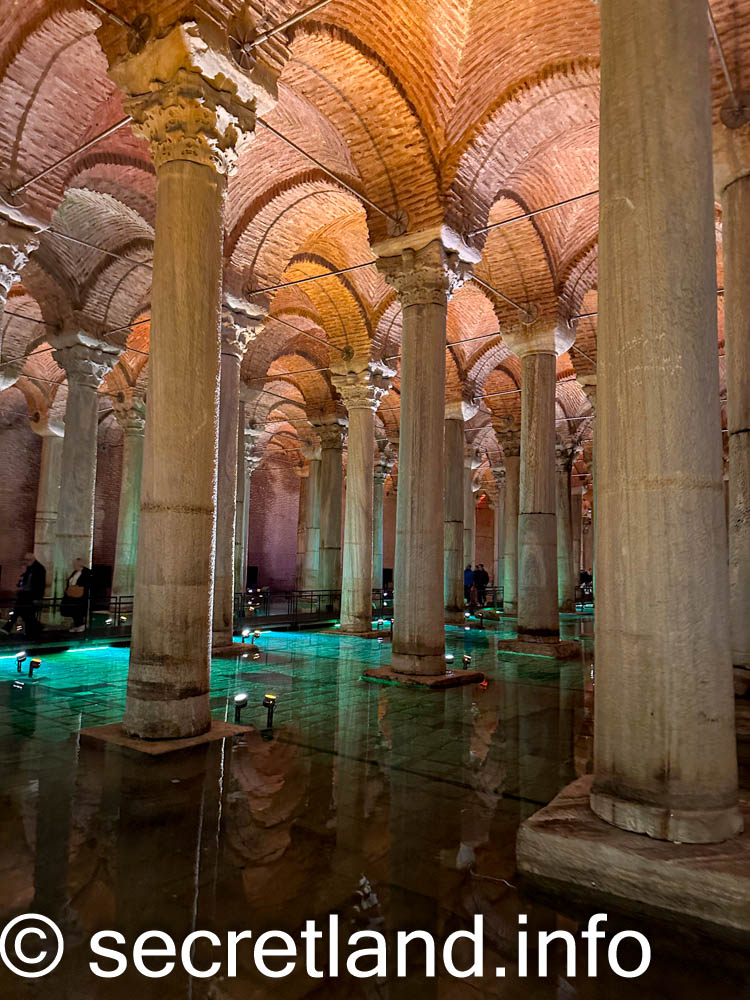
The cistern covers an area of approximately 10,000 square meters, measuring 140 meters in length and 65 meters in width, and has a capacity of up to 80,000 cubic meters of water. Its vaulted ceiling is supported by 336 marble columns. Ninety-eight of the capitals are in the Corinthian style, common in Roman architecture, while the rest are unadorned. It is believed that most of the capitals were produced specifically for the cistern, although some of the Corinthian ones were reused from existing structures in the city.
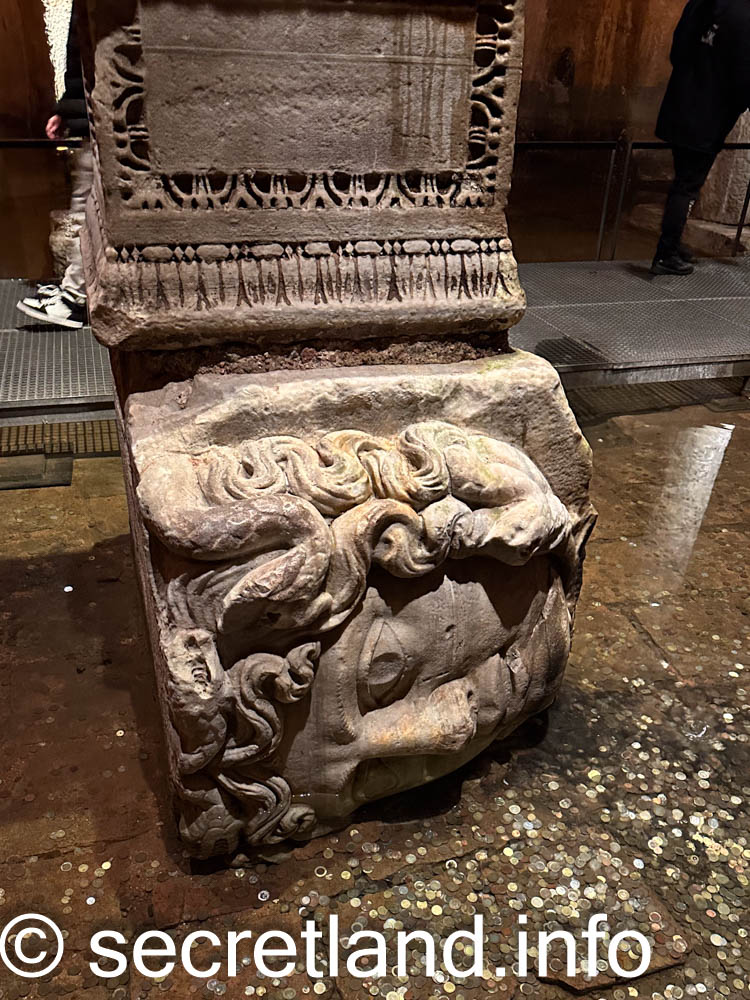
Among the decorative architectural elements brought from other buildings and reused in the Yerebatan Cistern, the most famous are the blocks with relief carvings of Medusa heads, which were repurposed as column bases along with their pedestals. Another notable feature is the so-called “Weeping Column,” decorated with a stylized tree-like pattern; it too was relocated from another structure and reused in the cistern. Both of these elements are thought to date back to the 4th century.
During the Ottoman period, the structure was restored and continued to be used. In the 16th century, it was studied by Petrus Gyllius, who came to Istanbul to research the city’s ancient topography. He noted that residents of houses built above the cistern would often draw water using buckets through wells that opened directly into it.
Under Ottoman rule, the Yerebatan Cistern was first restored during the reign of Sultan Ahmed III by the architect Kayserili Mehmet Ağa, and later again under Sultan Abdulhamid II. In the following years, the structure underwent multiple repairs. Between 1955 and 1960, nine columns that were at risk of collapse were reinforced with a thick layer of concrete.
During extensive restoration and cleaning works carried out by the Istanbul Municipality between 1985 and 1987, the famous Medusa heads—one of the most iconic features of the cistern—were rediscovered. One of the heads, located in the western part, is placed upside down, while the other, in the eastern part, lies horizontally. After the restoration in 1987, this magnificent structure was opened to visitors as a museum and has since become a venue for various national and international events. – Source
The Basilica Cistern is located near Hagia Sophia.
Address Alemdar, Yerebatan Cd. 1/3, 34110 Fatih/İstanbul, google maps
Opening hours: 09:00 – 22:00
After visiting the Basilica Cistern, when you come back up to the square, it’s hard to believe that such an incredible structure lies hidden beneath your feet.
The entrance ticket costs 1,950 lira. You can buy it at the ticket office at the entrance, but you will likely have to wait in line.
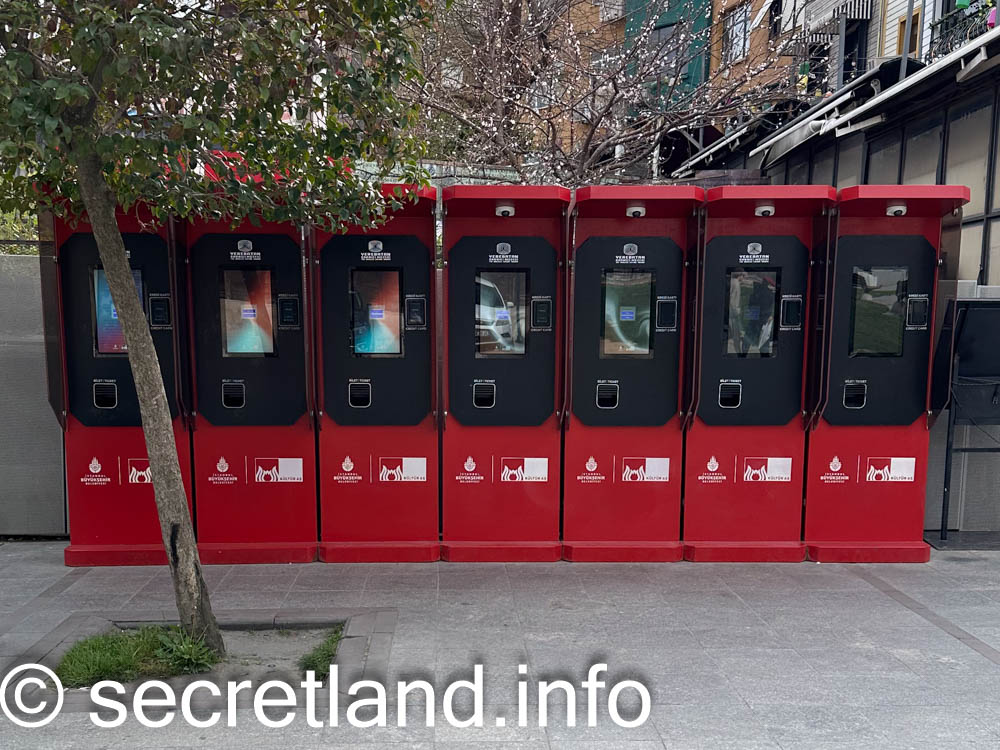
To avoid the queue, it’s better to purchase your ticket from the red ticket machines. With these, you can enter without waiting in line.
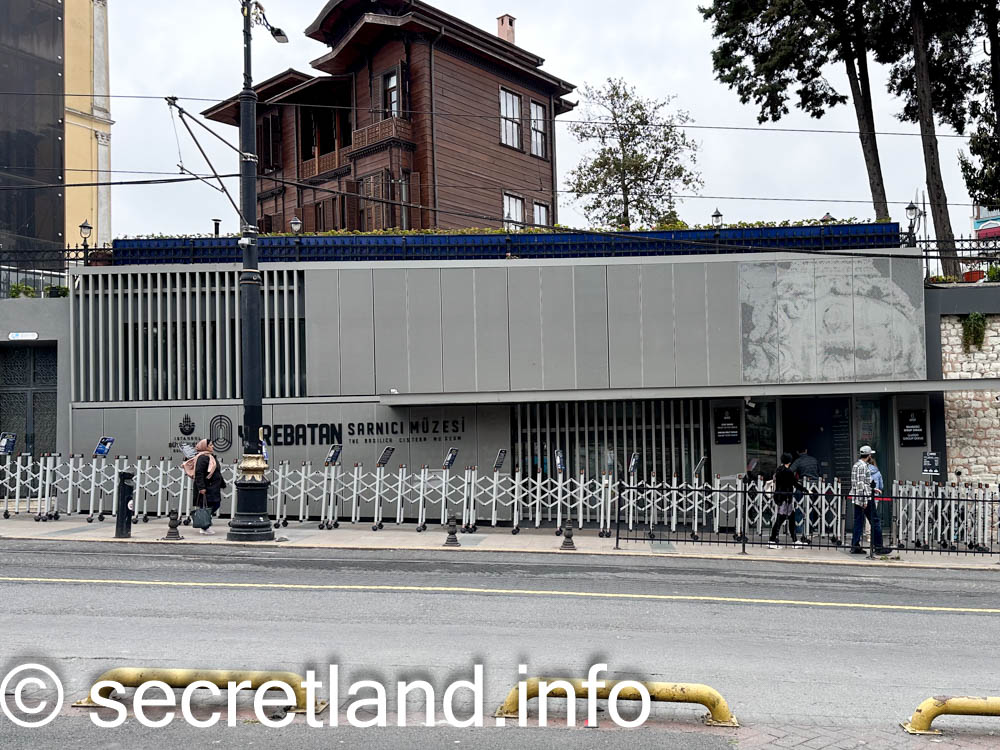
This is what the entrance to the Basilica Cistern looks like.
The Basilica Cistern caught my interest after I read Inferno by Dan Brown and watched the film adaptation starring Tom Hanks. In the story, a bag containing a virus was hidden inside the cistern. Through its waters, the virus was supposed to spread into the world’s oceans.
The structure truly amazed me — it’s enormous, and it’s hard to believe that just above you are the ordinary streets of the Sultanahmet district.
Column with the Head of Medusa
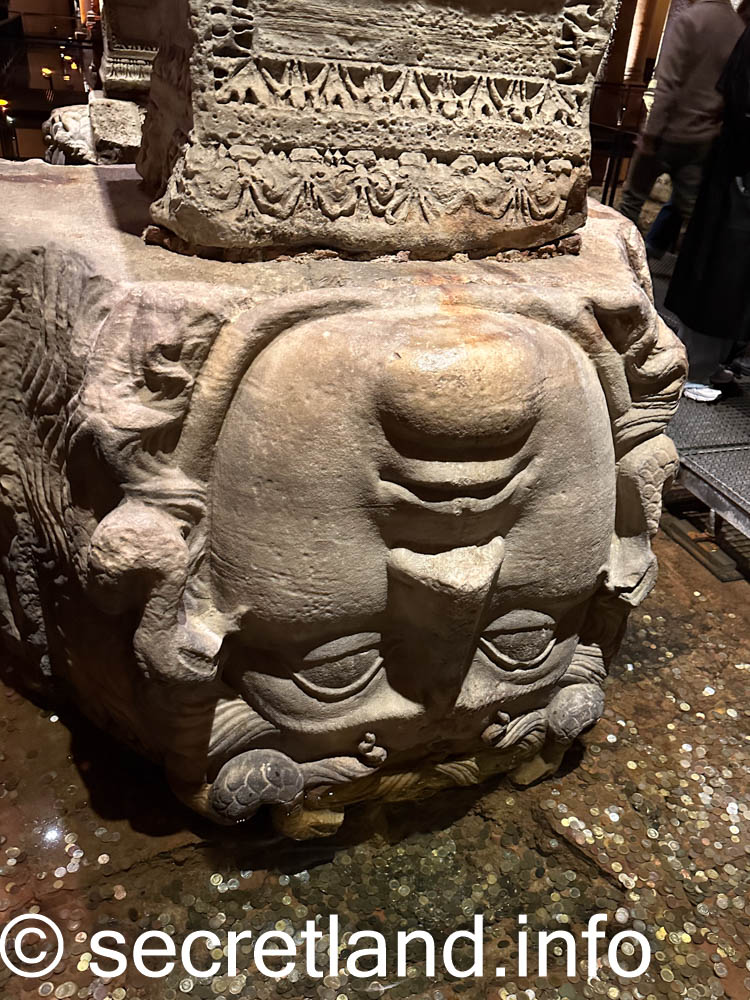
Another column with the head of Medusa.
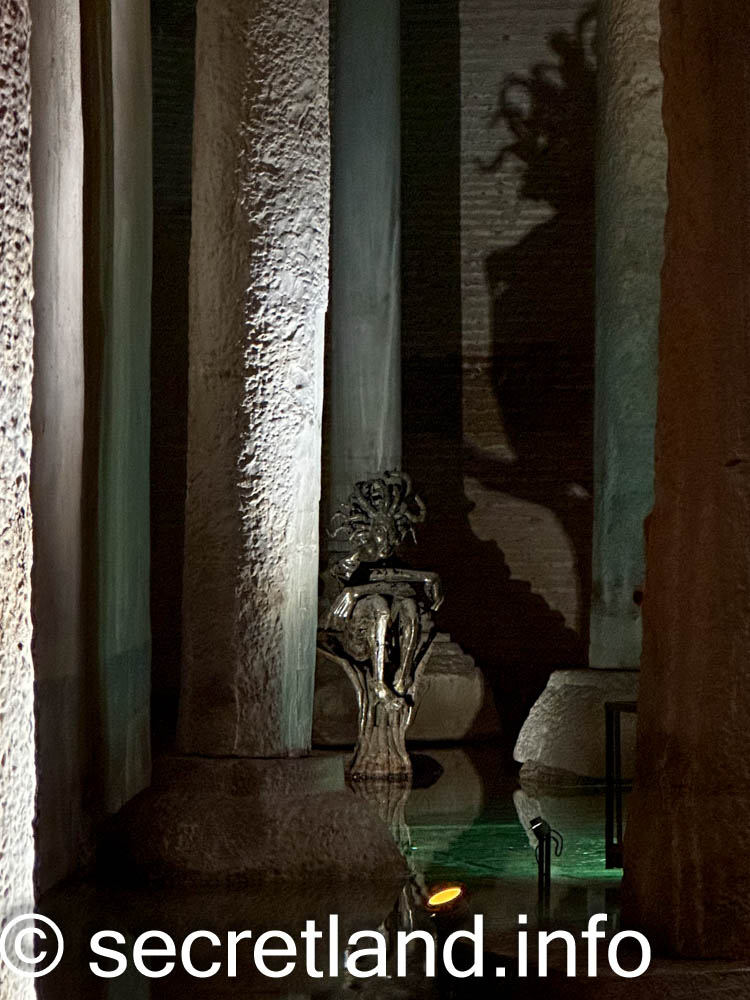
In the far corner of the Basilica Cistern, there is an area with a statue of Medusa. As I understand it, this appears to be a modern addition.
Türkiye
- Basilica Cistern in Istanbul – Yerebatan Sarnıcı
- Alva Donna Beach Resort Comfort
- Photos of Mediterranean Sea at sunset
- The tourist city of Side
- The Blue Mosque – Sultanahmet Camii in Istanbul
- Esto Restaurant in Istanbul
Discover more from Secret land
Subscribe to get the latest posts sent to your email.